“Let’s grow vegetables, and grow together!”
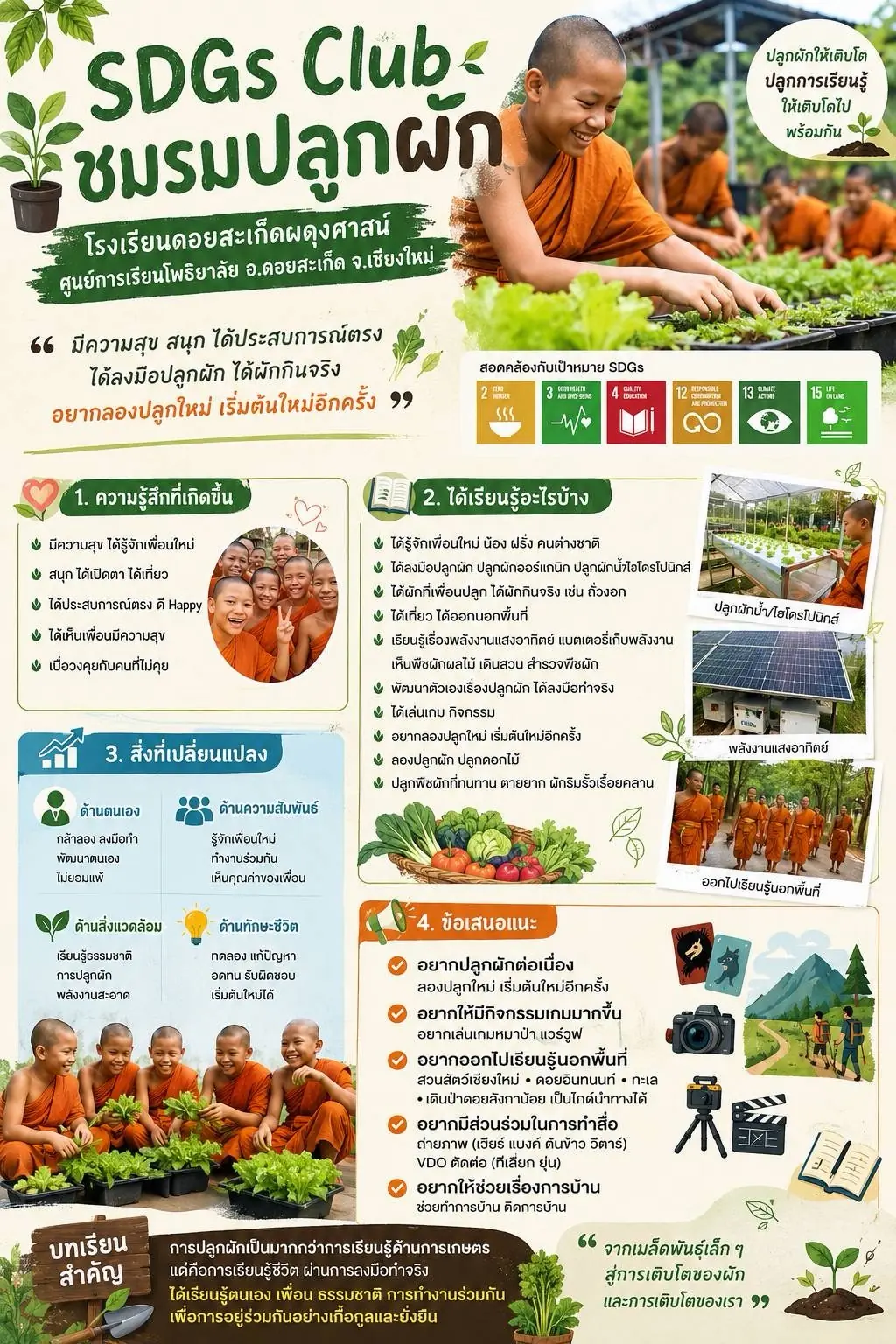
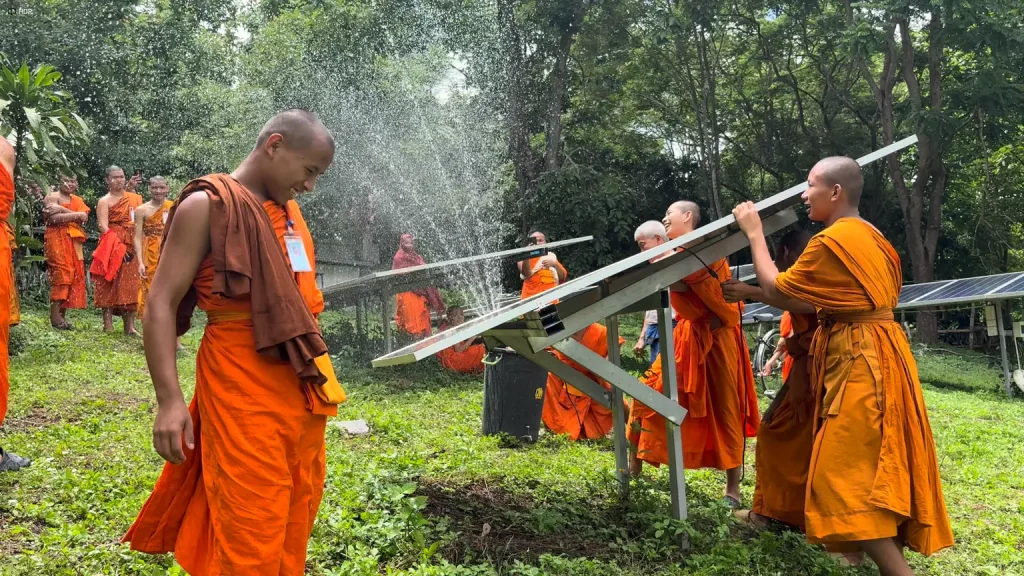
INEBs Little Buddha Vegetable Gardening project created a space for novice monks from Doi Saket Phadung Sasana School and the Phothiyalai Learning Center to learn through hands on experience. Vegetable gardening was used to teach practical growing skills, and also to explore nature, food, clean energy, self-reliance, teamwork and sustainable living. The novices planted organic and hydroponic vegetables, visited local farms, explored solar energy and took part in games and group activities.
Through hands-on learning, the novices planted, cared for and ate vegetables they had grown themselves, including bean sprouts. The activities helped them connect with new friends, younger children and people from other countries while learning about organic cultivation, hydroponics, solar panels and energy-storage batteries. Gardening also encouraged patience, responsibility, cooperation, problem-solving and the confidence to try again when something did not succeed.
The project supported several Sustainable Development Goals (SDGs), a set of global targets adopted by the United Nations in 2015 to end poverty, protect the planet and promote peace and prosperity for all.

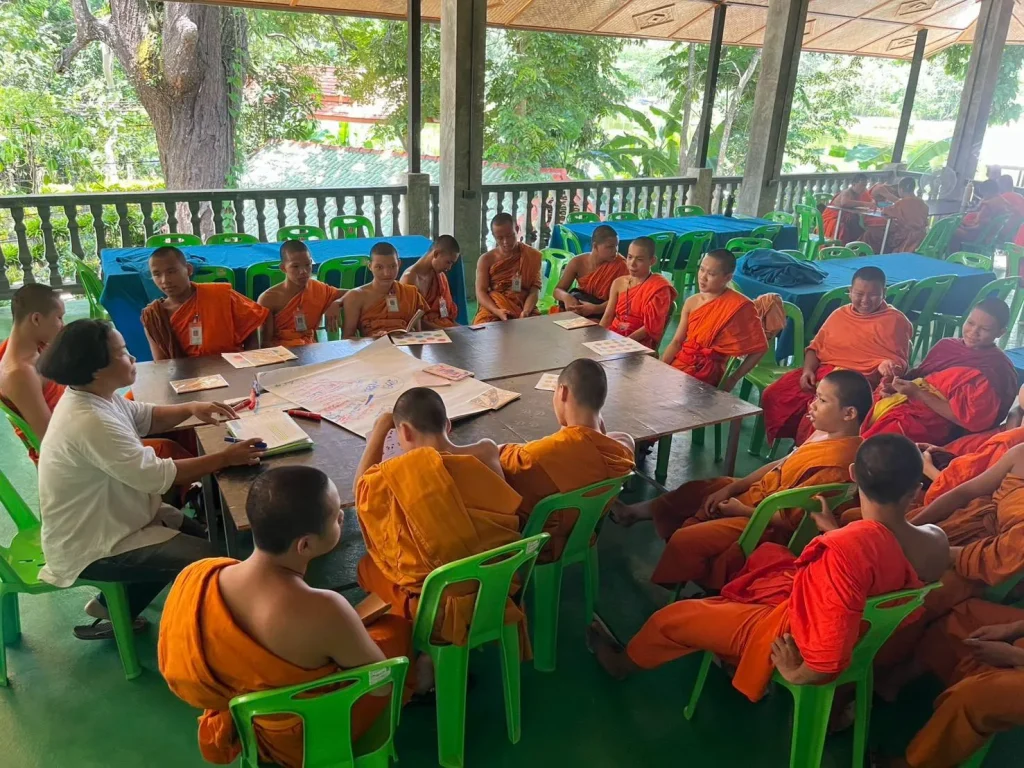
Voices of the novices
INEB’s Little Buddha project encourages child and youth participation and an important part of this is feedback and listening to ideas and comments from the group
“I was happy and got to know new friends.”
“It was fun, eye-opening, and I got to travel.”
“I gained direct experience. It was good. Happy.”
“I had vegetables that I could really eat, such as bean sprouts.”
“I want to try planting again and start over one more”
This highlighted the importance of using different ways to reflect and participate. Future sessions could include games, photographs, drawing, short stories and practical activities instead of relying only on long group discussions.
Looking ahead
The novices would like to continue growing vegetables, play more educational games and visit places such as Doi Inthanon, Chiang Mai Zoo and Doi Langka Noi. Some would also like to become guides or help document the activities through photography and video.
The central lesson is that vegetable gardening is about much more than agriculture. It can help young people learn about themselves, their friends, the natural world and how to live together in supportive and sustainable ways.
Learn more about INEBs Little Buddha Child Protection project Child Protection Unit