The 22nd Biennial INEB Conference
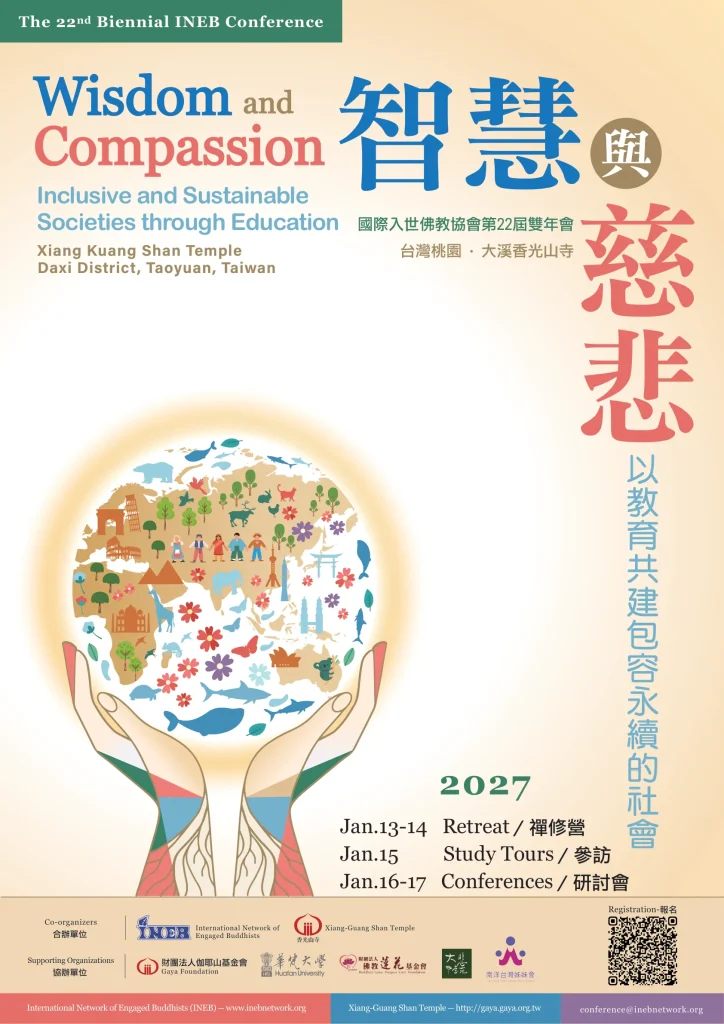
Wisdom and Compassion
Inclusive and Sustainable Societies through Education
Xiang Guang Shan Temple, Daxi, Taoyuan, Taiwan
13–17 January 2027
Conference Theme
The twenty-first century is a time of unprecedented transformation — technological acceleration, climate change, migration, aging populations, and widening inequality are reshaping societies faster than our institutions can adapt. Technological change in particular is reshaping how we relate to ourselves and to one another, and it cannot advance responsibly without a parallel cultivation of wisdom — insight into the interrelationship of all beings, compassion, and open-mindedness.
The 22nd Biennial Conference of the International Network of Engaged Buddhists (INEB), themed “Wisdom and Compassion for Inclusive and Sustainable Societies through Education,” explores how Buddhist wisdom and compassionate engagement can help address these challenges.
Hosted by Xiang Guang Shan Temple, the principal temple of the Luminary International Buddhist Society (LIBS), the gathering unites monastics, educators, and social activists to transform insight and compassion into action — advancing education that cultivates ethical leadership, strengthens social responsibility, and contributes to more sustainable and inclusive communities worldwide.
Education and Pedagogy
Buddhist tradition offers distinct pedagogical resources for contemporary learning: mental cultivation (bhāvanā), which cultivates insight alongside knowledge and skills; spiritual friendship (kalyāṇamitra), a peer-support model of dialogue and mutual accountability; and the principle of interdependence as a conceptual foundation for teaching ecological consciousness and social inclusion. The conference will explore how these resources can inform curricula, pedagogies, and training across monastic, community, and formal educational settings.
Goal and Objectives
Goal: To awaken participants to the Buddha’s teachings as a living resource for personal and social transformation, through reflection and action.
Deepen understanding of inclusive, sustainable societies and develop new programs in environmental resilience, pluralism, gender equality, and youth empowerment.
Strengthen education for change through curricula, pedagogies, and training grounded in contemplative practice, peer support, and interdependence.
Promote inter-faith dialogue and collaboration on shared concerns.
Celebrate the spirit of kalyanamitra through reflection and collective learning.
Schedule
| Date | Programme |
|---|---|
| Tuesday, 12 January | Eco Temple Network Meeting (By invitation) |
| Wednesday–Thursday, 13–14 January | 2-day Retreat based on traditional Chinese Monastic Practices integrated with Satipaṭṭhāna and Ten Paramis led by Luminary Xiang Guang Temple Bhikkhunis.• Chanting for Peace (Heart Sutra and Morning Bell Verse)• Satipaṭṭhāna Practices and its applications in daily life• Practicing Ten Paramis |
| Friday, 15 January | Study Tours Group 1: Aging Society: Holistic Well-Being for the Elder and Hospice Group 2: Children Education and ecological sustainability Group 3: Huafan University: Six Art Skills and Tea Garden Group 4: Migrant Workers and Social Development |
| Saturday, 16 January | Morning Section• Group Reflection and Sharing from the Study Tours• Embodied Experiences through arts and hands-onAfternoon Section• Breakout Group Discussions (Thematic Working Group) |
| Sunday, 17 January | Public SymposiumWisdom and Compassion: Inclusive and Sustainable Societies through Education |
| Monday–Tuesday, 18–19 January | Joint INEB AC/EC Meeting (by invitation) |