Written by Suchith Abeyewickreme, with references and images from Jungto Society
Colombo, Sri Lanka | 30 June – 5 July 2026
The International Network of Engaged Buddhists (INEB) witnessed another important milestone in strengthening regional cooperation as religious leaders from South Korea and Sri Lanka gathered for a week-long exchange programme focused on peacebuilding, interreligious dialogue, and socially engaged Buddhism.
The visit, jointly organized by Dharmashakthi in Sri Lanka, South Korea’s Peace Foundation and Jungto Society, was more than a study visit—it was a continuation of a growing friendship among INEB member organizations committed to building peaceful and compassionate societies.
The exchange followed the visit of a Sri Lankan interreligious delegation to South Korea in 2025, during which religious leaders from Dharmashakthi learned from the work of Jungto Society and the Peace Foundation in promoting reconciliation, peace education, humanitarian action, and dialogue on the Korean Peninsula. The 2026 programme reciprocated that experience, welcoming the Korean delegation to Sri Lanka to learn from local initiatives that have emerged in response to decades of ethnic and religious conflict.
The South Korean delegation brought together senior leaders from several religious traditions who have worked together for many years through the Peace Foundation’s Interfaith Religious Leaders’ Group for National Reconciliation and Peace. Led by Ven. Pomnyun Sunim, founder of Jungto Society and Chair of the Peace Foundation, the delegation reflected Korea’s commitment to interreligious cooperation as a foundation for peacebuilding.
Members included Mr. Park Nam-soo, former Head of Cheondogyo and Chair of the Interfaith Religious Leaders’ Group; Rev. Park Jong-hwa, a senior Protestant leader and long-standing advocate for reconciliation on the Korean Peninsula; Rev. Kim Dae-sun, a Won Buddhist minister and Standing Representative of URI Korea; and Fr. Kim Hong-jin, a retired Roman Catholic priest from the Archdiocese of Seoul. Together, the delegation represented the Buddhist, Christian, Won Buddhist and Cheondogyo traditions, bringing decades of experience in dialogue, social engagement and national reconciliation


A Journey Through Sri Lanka’s Living Traditions of
Peace
The programme began in Colombo, where the Korean delegation was welcomed by Dharmashakthi and introduced to Sri Lanka’s unique model of interreligious collaboration. Initial conversations explored the evolution of the country’s reconciliation efforts since the end of the civil war and the role that Buddhist, Hindu, Muslim and Christian leaders have played in rebuilding trust between communities. Participants also reflected on the common experiences of division shared by Korea and Sri Lanka and the potential for faith communities to become agents of healing rather than polarization. (Buddhistdoor Global)
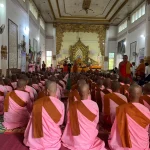
During a gathering and dialogue to mark the beginning of the pilgrimage, Sri Lanka’s Deputy Minister of Religious Affairs shared some words that reflected the aspiration of the pilgrims.
“ Sri Lanka has made great efforts in recent years to develop interfaith relations. Over the past two years, not a single case of religious or ethnic conflict has been reported,” the deputy minister noted. “The government is also continuously working to achieve harmony between religions and ethnic groups. We hope that through such meetings, peace and harmony will continue to expand.”
Travelling to Kandy and Anuradhapura, the delegation met senior most Buddhist leaders including the Mahanayaka Thero of the Malwatu Chapter of the Siyam Nikaya, Atamasthanadhipathi of the 8 Sacred Places in Anuradhapura. They also visited the Temple of the Sacred Tooth Relic and the Sacred Bo Tree, where discussions focused on Buddhism’s contribution to social harmony and the responsibilities of religious leadership in times of social change. The exchange provided opportunities for Korean and Sri Lankan Buddhist leaders to compare experiences of engaged Buddhism and explore how traditional religious institutions can respond to contemporary social challenges while remaining rooted in the Dhamma.
In Colombo and Kandy, the delegation met with Muslim religious leaders understanding how interfaith understanding and cooperation is promoted in Sri Lanka including visiti to the Harmony Center established at the Katukelle Jumma Masjid in Kandy.
The delegation also travelled to the Northern Province, where conversations with Hindu religious leaders and local communities focused on post-war recovery, healing and coexistence. These visits offered a deeper understanding of the continuing challenges faced by communities affected by conflict while highlighting inspiring examples of cooperation across ethnic and religious divides. Participants reflected on the importance of acknowledging historical suffering while creating opportunities for dialogue and shared futures.
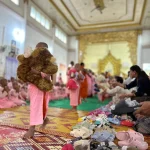
In Mankulam, the Joint Together Society together with local religious leaders organized distribution of relief items for 300 families affected by conflict and still facing economic and social difficulties.
The delegation engaged with Christian communities including the Cardinal Arch Bishop of Colombo. Director of the Center for Society and Religion, and Secretary General of theNational Christian Council (NCC) in open dialogue on interreligious cooperation, reconciliation and community resilience discussing many issues including justice for the victims of Easter Sunday terror attackes of 2019 and the socio-economic challenges the Malaiyaha Tamil commuinity continues to face.
Rather than formal diplomatic meetings, these encounters emphasized friendship, honest conversation and learning from lived experience. Religious leaders shared examples of collaborative responses to humanitarian crises, community tensions and local development initiatives that have helped strengthen social cohesion across religious boundaries.
Throughout the journey, Ven. Pomnyun Sunim encouraged participants to look beyond institutional dialogue and instead cultivate relationships rooted in mutual respect and practical cooperation. Daily reflections repeatedly emphasized that peace is built through everyday actions, shared meals, listening deeply to one another, and working together in service of communities rather than through declarations alone.
Following the main exchange with Dharmashakthi, the Korean delegation also had engagements with Sarvodaya Movement, one of Sri Lanka’s most influential community development organizations and a long-standing member of INEB and the Walpola Rahula Institute also a INEB member.

Strengthening the INEB Family
For INEB, the visit represented much more than an exchange between two countries. It illustrated the strength of relationships that have developed over decades among member organizations committed to socially engaged Buddhism and interreligious solidarity.
The participation of Jungto Society, Peace Foundation, Dharmashakthi, Sri Lanka Network of Engaged Buddhists (SriNEB) and the INEB Secretariat created a unique platform where Buddhist practitioners, peacebuilders and religious leaders could learn directly from one another while identifying opportunities for future collaboration.
For the Korean delegation, Sri Lanka demonstrated how religious communities can contribute meaningfully to reconciliation following decades of conflict. For Sri Lankan participants, the exchange offered valuable insights from the Peace Foundation’s work on peace and reunification on the Korean Peninsula and Jungto Society’s model of integrating Buddhist practice with humanitarian service and social engagement. As both countries continue to navigate complex social challenges, the visit reaffirmed that authentic dialogue grows through friendship, shared learning and collective action.
Looking Ahead
The Korea–Sri Lanka exchange stands as a powerful example of the role that INEB continues to play in connecting Buddhist practitioners and partner organizations across Asia. By creating spaces where members can learn from one another’s experiences and build lasting partnerships, INEB strengthens a regional movement committed to compassion, justice, nonviolence and the wellbeing of all.
The visit concluded not as the end of a programme, but as another step in an ongoing journey of cooperation between Jungto Society, the Peace Foundation, Dharmashakthi, SriNEB and the wider INEB family.